
LSC’s PRISM 2026 Brings Industry, Government and Skill Ecosystem Together to Shape India’s Future-Ready Logistics Workforce
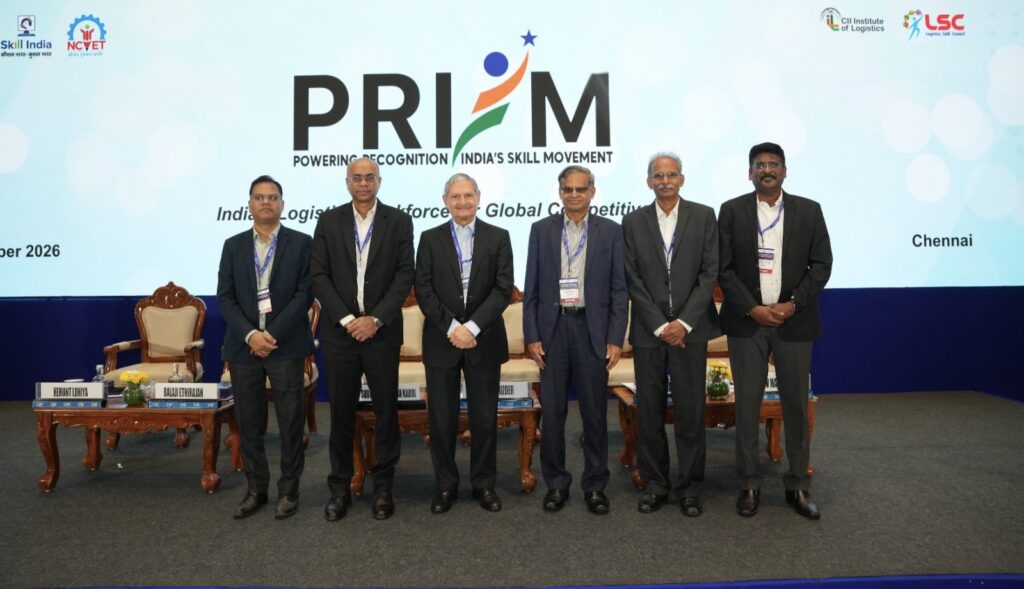
The Chennai industry connect meet focused on emerging skill requirements, technology-led transformation and building a globally competitive logistics workforce
Chennai, 9 October 2026: The Logistics Sector Skill Council (LSC) hosted PRISM 2026 – Powering Recognition: India’s Skill Movement, an Industry Connect Meet that brought together senior government officials, industry leaders, representatives of Sector Skill Councils, education and training institutions, and key stakeholders from across India’s skilling ecosystem to deliberate on the future of workforce development in the logistics sector.
Centred on the theme “India’s Logistics Workforce for Global Competitiveness,” PRISM 2026 focused on evolving industry skill requirements and the need to build a future-ready workforce capable of adapting to technological advancements, emerging career opportunities and the growing integration of India’s logistics sector with global supply chains.
The discussions underscored the growing significance of logistics in India’s economic ambitions and highlighted the importance of strengthening collaboration between government, industry and the skilling ecosystem to ensure workforce development keeps pace with the sector’s rapid transformation.
Speaking at the event, Mr Cyrus Guzder, Chairman, Logistics Sector Skill Council, said, “India’s logistics sector is undergoing a fundamental transformation, driven by technology, automation, digitalisation and growing global integration. Our focus must move beyond simply training people to building a workforce that is employable, adaptable and capable of meeting global standards. PRISM provides a platform for stakeholders to come together, understand emerging requirements and translate those insights into meaningful action.
Preparing India’s logistics workforce for the future
PRISM 2026 featured discussions on the changing dynamics of the logistics industry and the skills required to prepare its workforce for the future.
The session titled “Building a Future-Ready Logistics Workforce – Skill Demand and Sector Transformation” examined evolving industry requirements and the need to align training and workforce development with emerging business and operational priorities.
The subsequent session, “Workforce 4.0,” explored the impact of artificial intelligence, automation, global mobility and emerging careers on the logistics talent landscape. The discussions emphasised the importance of continuous upskilling and reskilling to ensure that India’s workforce remains relevant and competitive as technology reshapes job roles, processes and operating models.
Another key discussion, “The SSC Toolkit,” examined how Sector Skill Councils can support industry through government schemes, policy incentives and effective implementation mechanisms. The session highlighted opportunities to strengthen collaboration among industry, government and training institutions to address skill gaps and improve the relevance and effectiveness of skilling initiatives.
India’s WorldSkills achievement showcases global talent potential
A key highlight of the discussions was India’s achievement at WorldSkills Shanghai 2026, where the country won a Silver Medal in Logistics and Freight Forwarding. The accomplishment demonstrated the potential of Indian logistics talent to compete at international standards and reinforced the importance of creating more opportunities for young professionals to develop advanced skills and pursue global careers.
PRISM 2026 reinforced the need for a coordinated approach to workforce development, with industry providing demand insights and workplace exposure, government enabling an appropriate policy environment, and the skilling ecosystem translating emerging requirements into relevant qualifications, training programmes and assessment frameworks.
The discussions also emphasised the importance of establishing clear career pathways, encouraging lifelong learning and ensuring that India’s logistics workforce is equipped to support the country’s expanding domestic and international logistics requirements.
Through PRISM, the Logistics Sector Skill Council reaffirmed its commitment to working closely with government, industry, academia, training partners and other stakeholders to build an industry-led, future-focused and globally competitive logistics workforce.
As India strengthens its position in global supply chains and advances its economic ambitions, collaborative and industry-aligned skilling will remain central to developing the talent required to power the next phase of growth in
About Author