
Multidisciplinary Pediatric Care Enables Successful Liver Transplant for 3-Year-Old with Rare Liver Disease
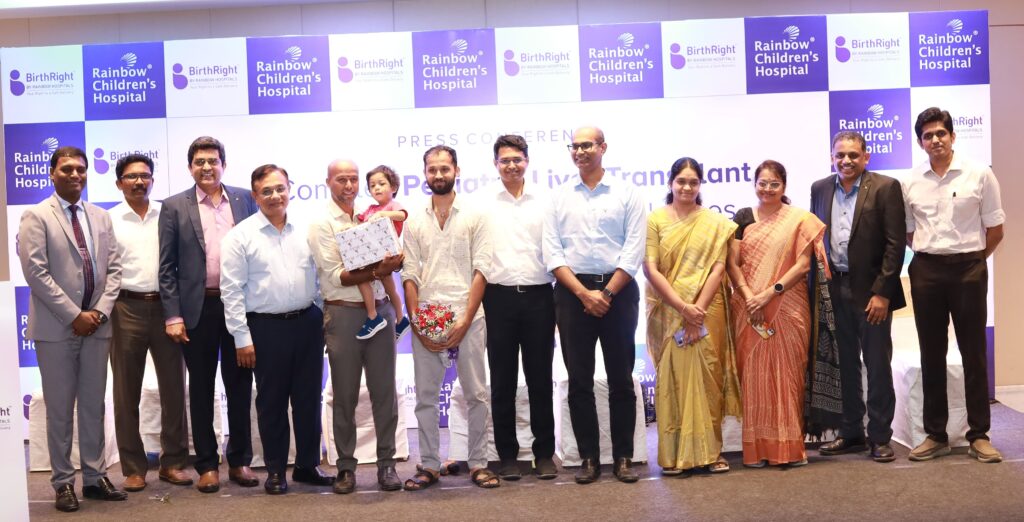
Chennai, 30th September, 2026: In yet another case highlighting the importance of a multidisciplinary approach in managing complex pediatric conditions, doctors at Rainbow Children’s Hospital successfully performed a liver transplant on a 3-year-old child diagnosed with the rare systemic disorder Langerhans Cell Histiocytosis (LCH), whose treatment was further complicated by an underlying congenital abnormality of kidneys causing recurrent urinary tract infections. The child’s treatment involved multiple specialties and required the medical team to address one clinical challenge after another before the child could safely undergo transplantation.
The child was initially brought to Rainbow Children’s Hospital with complaints of jaundice. Investigations revealed LCH, a rare systemic disorder, with significant liver dysfunction. Given the severity of the liver involvement, the initial focus was on controlling the underlying LCH and improving the child’s condition before transplantation. Chemotherapy was therefore initiated. However, with the liver already severely compromised, the treatment itself had to be carefully adapted. The child was placed on a low-dose chemotherapy which showed only partial response. Now there is a significant advancement in the newer targeted therapy which resulted in a good response in the LCH.
While this represented a significant response to treatment, the child’s clinical journey became more complex when he began developing recurrent urinary tract infections during chemotherapy. Rather than treating the infections as an isolated complication, the medical team investigated the underlying cause. Evaluation by the pediatric nephrology and urology teams revealed congenital vesicoureteric reflux, a condition in which urine flows backwards towards the kidneys, increasing the risk of recurrent infections.
With a liver transplant being considered and the risk of infection, needing to be minimized, the urinary abnormality had to be addressed before transplantation. The child therefore underwent a successful ureteric reimplantation surgery to reposition the ureter and correct the underlying abnormality. A temporary stent was subsequently placed to support the urinary system and reduce the risk of further infections during the transplant process.
Further to this, Dr. Nandhini G, Senior Consultant – Pediatric Surgeon and Urologist, Rainbow Children’s Hospital, Guindy, said, “Recurrent urinary infections became an important concern as the child was being prepared for liver transplantation. Further evaluation identified congenital vesicoureteric reflux, where urine flows backwards towards the kidneys, increasing the risk of repeated infections. We performed ureteric reimplantation surgery with stent placement to correct the abnormality and close monitoring. Addressing the urinary condition before transplantation was important to reduce the risk of further infections and ensure that the child was medically stable for the next stage of treatment. The child was subsequently able to proceed with the liver transplant after recovering from the procedure.
About Rainbow Children’s Medicare Limited: Rainbow Children’s Medicare Limited has a network of 26 hospitals across 11 cities, supported by 6 outpatient clinics and 2 exclusive IVF centres, with a total capacity of 2,505 beds .Our Pediatric services operating under the brand “Rainbow Children’s Hospital” includes new-born and pediatric intensive care, pediatric multi-specialty services, pediatric quaternary care (including organ transplantation); whereas our women care services under “Birthright by Rainbow” offers perinatal care services which includes normal and complex obstetric care, multi-disciplinary foetal care, perinatal genetic and fertility care along with gynecology services.
About Author